Nash–Joe Lewiston relationship
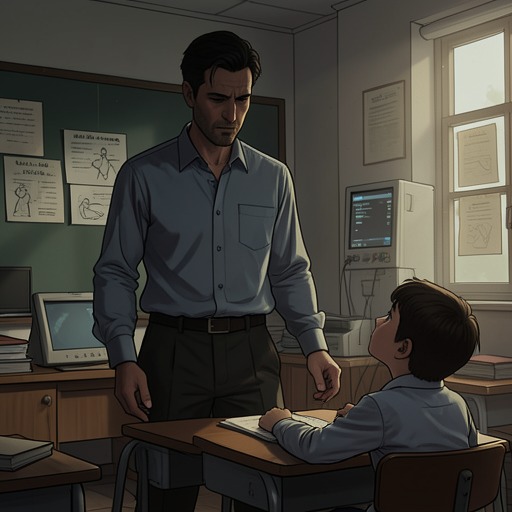
Hold TightNash–Joe Lewiston relationship is a bond of in-law kinship, grief, and protection that becomes a source of both refuge and danger. Joe relies on Nash as the person most likely to stand by him, while Nash understands that loyalty through a promise to his late wife, Cassandra Lewiston. As Nash acts on that promise, the distinction between protecting Joe and enabling him grows increasingly difficult to maintain.
Family Bond and the Promise
Joe is Cassandra’s youngest brother and had been her favorite. After the murder of their oldest brother, Curtis Lewiston, Cassandra grieved intensely. Nash had promised her that he would find Curtis’s killer, though he did not fulfill that particular vow; Cassandra, the account makes clear, had wanted her brother back rather than vengeance. Nash made a different promise that became central to his relationship with Joe: he would not let Cassandra suffer the pain of losing someone she loved again, and he would protect those people.
Nash renewed that commitment at Cassandra’s deathbed. She asked whether he would be there for her loved ones, and he said yes. When she added that they would also be there for him, he did not answer. The exchange gives the promise an asymmetry: Nash accepts responsibility for others but does not affirm that he will rely on them in return. His fidelity to Cassandra therefore becomes a duty he carries forward, even as the relationship’s terms leave little room for mutual care.
Joe’s Reliance on Nash
Joe has three older brothers still alive, yet he relies on Nash more than on any of them. In Joe’s view, Nash and Cassandra had seemed an unlikely couple until their closeness made them appear almost like a single person. Cassandra’s death devastated Nash, and Joe observed a marked change in him afterward. Nash seemed colder and more selective about whom he cared for; to Joe, that reserve was reassuring rather than alienating. It suggested that when Nash chose to protect someone, his attention would be concentrated and dependable.
That confidence has particular weight for Joe, who remembers himself as an unathletic son overlooked by a demanding father. Nash’s assurance that he would protect him is not merely a general expression of family support. Joe believes Nash means it and will go to extraordinary lengths to keep his word. The promise that might sound unsettling from someone else becomes, in Joe’s eyes, a source of security.
The relationship’s protective function appears in a direct crisis when Joe tells Nash that Guy Novak has been driving past his house, slowing down and glaring. Joe fears that Guy is frightening Dolly and Allie. Nash tells Joe he did the right thing by calling and tries to calm him. The exchange shows Joe turning to Nash when his household feels threatened, and Nash responding as the reliable protector he promised Cassandra he would be.
Protection in a Wider Family Crisis
Joe’s reliance persists beyond that immediate threat. While thinking about the Lorimans’ appeal for help with Lucas Loriman’s serious illness, Joe considers his own child’s vulnerability and finds that another family’s suffering does not make his troubles disappear. His thoughts turn to Nash, the person he trusts to act decisively and in Joe’s interest. Joe describes Nash’s apparent willingness to disregard conventional limits as both frightening and exhilarating: protection from him carries force precisely because it is not confined to reassuring words.
Nash has made the promise explicit to Joe after Cassandra’s funeral: he will protect him. Joe’s certainty that Nash will do whatever he can to keep that promise is a central fact of their bond. But the same certainty that comforts Joe also lowers the barrier between asking for help and involving Nash in a dangerous situation. The relationship is built not only on affection and kinship but on Joe’s belief that Nash can solve problems that Joe cannot manage alone.
Loyalty Turns into Complicity
When Joe faces the consequences of his involvement with Marianne Gillespie, that reliance acquires a criminal cost. After seeing an email with the video attached, Joe panics, deletes it, and changes Dolly’s password so she cannot access her own email. He feels there is no one he can speak to who would understand and remain wholly on his side; he thinks of Nash. Joe then recognizes that Nash has murdered Marianne and that Reba Cordova is missing. He suspects Marianne may have given Reba a copy of the video, though he cannot establish that as fact.
Joe had not expected Nash to go so far. He had imagined that Nash might buy the tape from Marianne, negotiate with her, or at worst frighten her. The discrepancy between the help Joe thought he was seeking and Nash’s actual violence forces Joe to confront what his trust has set in motion. He wants to tell Dolly everything, yet recoils from the consequences: reporting Nash could send him to prison, and Joe fears that the police would see him as the person who hired someone to carry out the crime. He also knows that he was the one who brought Nash into the situation.
The relationship therefore ends this portion of the story under strain rather than resolution. Joe recognizes that Nash’s protection has become inseparable from a crime he did not foresee, but he hesitates to expose Nash because doing so could destroy both of their lives and his family’s stability. His loyalty, fear, and self-preservation pull in different directions. What began as Nash’s vow to honor Cassandra’s wishes has become a bond that protects Joe from feeling alone while also binding him to the consequences of Nash’s actions.